
This spring, the Public Utility Commission stated that the net metering rule had “run its course” and shared its intention to open rulemaking to revise the program. That rulemaking is now underway, and it poses financial risks for both current and future net metering customers.
REV believes the compensation for net metering currently undervalues the contribution of behind the meter solar to relieving grid congestion, reducing transmission costs and fighting climate change and believes net metering should be made more affordable for more Vermonters
But, based on the past actions of the Public Service Department and Public Utility Commission, REV believes that the Commission’s rule making process will result in reductions of both:
- the compensation owed to the existing roughly 20,000 net metering customers; and
- how much new net metering customers receive for for going solar at home.
Compensation cuts to existing net metering are a broken promise by the state, sending a clear message to investors that Vermont is not a stable and predictable place to do business. In addition, further cuts to compensation for new net metering threaten its future viability in the exact moment when rising energy prices and interconnection log jams make on site solar even more necessary to meet energy needs.
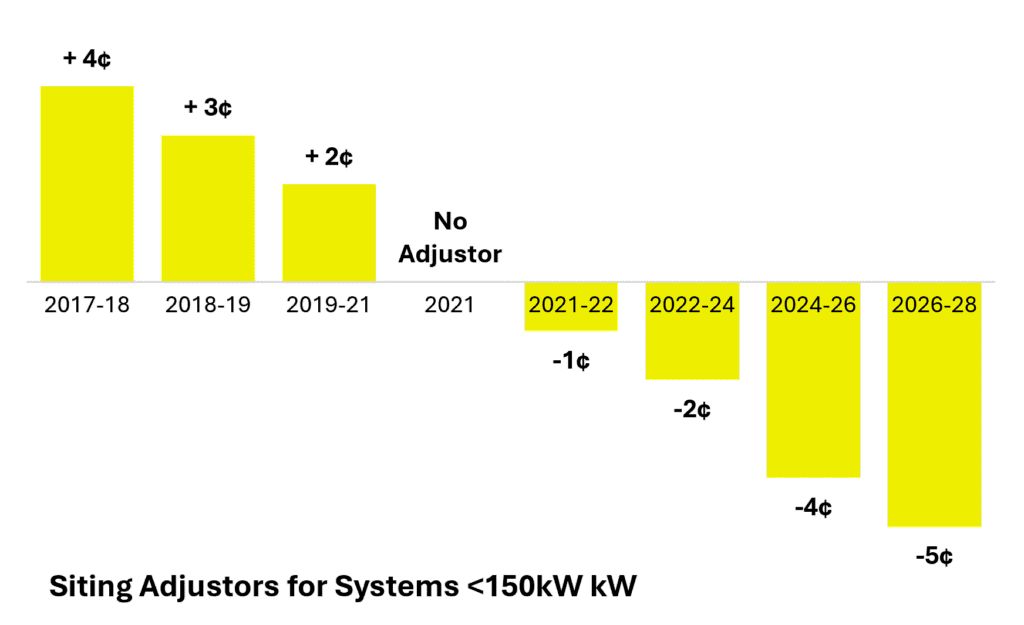
Since 2018, the Public Service Department has recommended, and the Commission has implemented, seven cuts to the siting adjustors that apply to net metering systems which has generally led to fewer Vermonters going solar at home every year.
Since 2019, the Department has advocated for a drastic change to the net metering program to value net metering credits at “avoided cost” rather than based on retail rates. This is lowers compensation net metering customers receive from between 16-20 cents to about 6 cents for the power they generate at home. This change would reduce the value of net metering credits by 50% or more for some net metering customers.
In addition, this past spring the Department recommended freezing the bi-annual blended rate increase which will also cut compensation for existing net metering customers.
Moreover, the Department has recommended making both these structural changes apply retroactively to the systems that exist today. The Commission has cited a prior rulemaking process that changed the compensation owed to existing net metering customers 10 years from the time their systems were installed to show that it has the authority to make exactly this kind of retroactive change. Doing so in this case would mean the loss of hundreds of dollars per year for Vermont families that invested in solar under the existing rule. For schools and other owners of larger arrays, the change could cost tens of thousands of dollars per year.
Since the Commission’s rulemaking process does not need Legislative approval, the only way to protect net metering is for Vermonters to submit comments to the Commission urging them to reject retroactive cuts for existing net metering customers and for fair compensation that supports the continued deployment of rooftop and backyard solar.
To stay informed about the rulemaking process and opportunities for public input, contact REV Deputy Director Jonathan Dowds at jonathan@revermont.org
You can also submit a comment supporting net metering anytime by email PUC.Clerk@vermont.gov with case #26-1786 in the subject line
Rulemaking Schedule and Timeline:
The Commission order opening rulemaking states that “the proliferation of distributed solar generation across the state requires a reexamination of the compensation framework for net-metering systems to ensure that these systems provide the maximum benefit to all Vermonters” and articulates three priorities for the rulemaking:
- Encouraging net-metering systems that offset load “when they can provide the greatest value to Vermont utilities and ratepayers”
- Steering future net metering away from congested areas of the grid, and
- Unspecified ” amendments or updates to other aspects of the Net Metering Rule later in this proceeding”
The Commission has opted to begin the rulemaking process with a virtual workshop on October 2, 2026 during which VELCO willl provide an overview of its 2024 Long Range Transmission Plan, focusing on the section discussing distributed generation.
While the last net metering rulemaking process took five years to complete, the Commission may attempt to complete the rulemaking process before the 2028 Biennial Update. Since this new rule could govern the future of net metering for the next decade or more, REV firmly believes that getting the rulemaking done right is more important than getting it done fast.